When we launched the National Social Value Marketplace® a year ago, the ambition was straightforward. One place where public, private, and VCSE organisations could find each other, form partnerships, and evidence the social value they deliver. Not proxy numbers on a spreadsheet. Not tick-box compliance. Real, measurable outcomes for and with real communities.
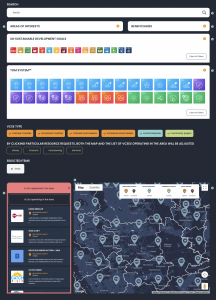
Since then, more than 300,000 VCSEs across the UK have been mapped within the platform. £2.5M in government funding has been distributed to 270 VCSEs. Hundreds of organisations have built profiles, posted money, product, service and skills offers, and started forming partnerships that would not have existed without the marketplace.
We also learned, sometimes painfully, what was not working. At whatimpact, our user base consists of various roles in the VCSE sector, but even more in the private sector. Companies use us from bidding, to delivery to reporting involving people from sales, bid, social value, reporting and HR backgrounds to use the same system – this creates challenges as the reasons to use the platform are different. Also, the experience level of working with VCSEs.
Today we launch whatimpact 2.0, shaped entirely by the people who use the platform every day.
What we heard
We spent the past year listening. Not in a polished corporate feedback way. We have sat with our platform users for days to get their information on the user experience, but also about the fast moving social value management landscape.
Economic pressures are hitting social value management too. Harnessing tech is essential for any company and professional to keep social value management efforts not only efficient, but delivering more value than the investment and coordination value would be. The word ‘value’ is the key. If coordination, management, spreadsheets and the impossible task of keeping team members informed of social value commitments, KPIs etc through manual work, is costing more than value on the ground, the society, businesses and people are losing. Our dedicated clients know this well, and that is why e.g. Higgins has chosen to centralise their VCSE partnership management on whatimpact.com. Click here to view HIGGINS TESTIMONIAL.
A completely redesigned experience
We overhauled the entire user interface. Not to make it look different. To make it work differently. whatimpact.com 2.0 project involved three key areas for improvement, two further developments coming up later in 2026.
1. Volunteering that goes beyond the photo opportunity
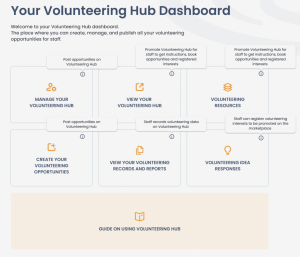
Most volunteering apps and platforms brag on long list of volunteering opportunities to sign in without corporate need for any management. One can only wonder how needed these volunteers are, when there is an open end date and no need for establishing an understanding of the true need, how to best work together and maximise the partnership.
Hence, whatimpact 2.0 introduces a volunteering management system purpose-built for government contract delivery, designed to connect volunteering activity directly to procurement commitments forming a partnership between the company and VCSE. Yes, there will be coordination, but most of it has been automated for the benefit of the users.
Focus on skills-based matching means people are paired with opportunities where their expertise creates genuine value, not just their presence. Contract-level tracking means every hour of volunteering is linked to specific social value commitments and delivery obligations, visible at supply-chain level. VCSEs propose open, relevant and sometimes tailored volunteering options for their partner companies – yes, it is a formalised partnership through our matching system.
Also, employees can pledge time, propose locally relevant opportunities rooted in their own lived experience, and engage with volunteering that aligns with both the company’s strategy and their own skills. Opportunities are promoted per contract and delivery team, so the right people see the right work.
2. Grant-making, done properly
£2.5M in government funding. 270 VCSEs. One platform. Those are not targets. That is what has already been distributed.
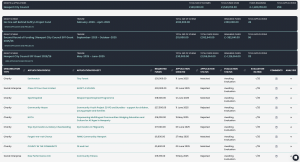
With whatimpact 2.0, the grant-making system has been completely rebuilt. Flexible, built-in scoring brings consistency and transparency to evaluations. Automated grant letters cut administrative overhead. Integrated impact reporting means funders can track what their money actually achieved, not just confirm it was spent.
We have also introduced a full grantmaker evaluation, scoring and feedback dashboard system, which is audit ready. This is use with Newport City Council for their SPF and No One Left Behind poverty grant schemes.
The whole process aligns with TOM System Measures, UK Shared Prosperity Fund targets, and Local Growth Fund requirements. Whether you are a local authority distributing public funds or a corporate foundation running a grant programme, the platform handles the mechanics so you can concentrate on the outcomes.
3. The only standardised qualitative impact reporting system in the UK
This is the part that matters most.
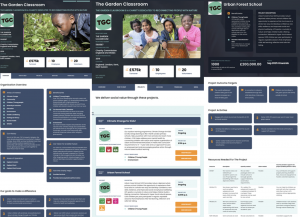
Social value reporting in most organisations still relies on proxy measures. Hours volunteered. Money committed. Headcounts logged. These tell you inputs happened. They do not tell you whether anyone’s life got better.
whatimpact 2.0 includes the only standardised qualitative impact reporting system in the UK, now enhanced with AI.
Organisations can merge and analyse large volumes of impact reports, capturing the detailed impact that normally disappears into spreadsheets nobody revisits. The focus is on outcomes, beneficiary experience, and case studies. Evidence of what changed, not just records of what was given.
AI-driven analysis aggregates impact data at scale, allowing organisations to identify trends, measure reach, and evaluate outcomes across entire portfolios rather than isolated projects. This is not reporting for its own sake. It is decision-grade intelligence for procurement teams, ESG/CSR professionals and grant funders. Although we see a focus in using impact reports for these commercial purposes, they are also valuable data to analyse whether the investment delivered what was promised – and whether to consider partner again with the same VCSE.
All outcomes on whatimpact are mapped directly to the TOM System, TOM Wales, the Government Social Value Model, UK Shared Prosperity Fund, and Local Growth Fund targets. Each outcome is tagged with a selected framework. This makes whatimpact impact reporting verified evidence for any proxy claims.
For commissioners, this is evidence you can trust. For VCSEs, it is a way to show the full depth of what they deliver, without burdening them with vague evidence requests with no format.
What comes next
whatimpact 2.0 is a starting point, not a destination.
The roadmap for the rest of 2026 is already in motion. New dashboard technology will provide clearer visibility of partnerships, outcomes, and geographic reach across contracts. And more AI aggregation.
Later in the year, we will introduce school-level data with a focus on areas of highest deprivation, enabling suppliers and authorities to direct social value investment where it can have the most lasting impact.
Every step is shaped by the same principle that built 2.0: listen to the people using the platform, then build what they need.
If you are already on whatimpact, log in and see the difference. If you are not, there has never been a better time to join.
“whatimpact National Social Value Marketplace® offers a powerful solution for rapidly connecting community and third sector organisations of all sizes and capabilities with the resources they need. By simplifying the process of completing application forms, it ensures equitable access to funding and support that strengthens their ability to deliver impact.
For local authority officers, the platform provides an intuitive, easy-to-navigate interface to monitor and evaluate the outcomes of procurement and project-based funding. It enables them to quickly see the real-world effects of contractor contributions and other funding on participating VCSEs. Crucially, this transparency is delivered in a way that is seamless and non-disruptive for both contractors and the community organisations delivering at the local level.”
Economic Development Manager ALASTAIR SHANKLAND, Newport City Council