Invited to a roundtable convened by WPI Strategy and Knight Dragon, we shared what five years on the ground have taught us — and what the white paper now being prepared for government should address.
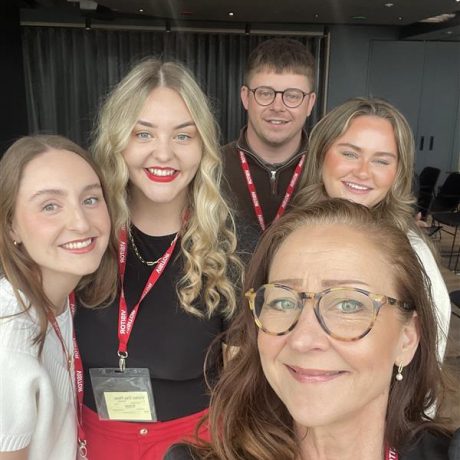
whatimpact was recently invited to contribute to a roundtable convened by WPI Strategy and Knight Dragon as part of the work of the Social Value Commission. It was a genuine privilege, and a sign of how seriously the question of community benefit is now being taken at the most senior levels of British business and policy.
The Social Value Commission is an independent body formed by some of the country’s leading businesses — among them Barratt Redrow, E.ON UK, Heathrow, Knight Dragon, Mitie, Pension Insurance Corporation, the Premier League, Mott MacDonald and VodafoneThree. Its purpose is to advise national policymakers and to work with local government so that local residents genuinely share in the benefits of the investment and private-sector activity happening in their communities. Its commissioners are already investing at scale — in transport and digital connectivity, skills, regeneration, housebuilding and low-carbon energy — and they are supported by an advisory board drawn from combined authorities, universities, business bodies and civil society, including Greater Manchester, the West Midlands, the Northern Powerhouse Partnership and the CBI. Through polling, research and regional roadshows, the Commission is building toward a policy paper of practical recommendations for government and the private sector, facilitated by WPI Strategy.
That is exactly the kind of forum where the next chapter of social value can be written, and we were glad to bring a view from the ground.
Five years of listening, and a problem that has not yet shifted
whatimpact has spent five years meeting several hundred procurement and social value teams across councils, central government and other public bodies. In 2023 we set out much of what we were hearing in our Social Value Manager white paper, which examined the emerging profession and the obstacles in its way. More than two years on, it is worth being honest: too little has changed for the better. Social value still means different things to different people — what it is, how it is delivered, and how it is valued — and there is still no accredited route to becoming a social value professional. The barriers we described then are largely the barriers that remain. That is not a counsel of despair; it is precisely why this Commission’s work matters, and why the white paper it is preparing is such an opportunity.
Here is what we contributed to the conversation.
Fragmentation is quietly draining the system
There are hundreds of public sector bodies in the UK, and most are understandably protective of their independence. The effect, though, is that the way social value is requested, delivered, evidenced and reported can differ from one authority to the next, with little carried over between them. In places like London, where many authorities sit close together serving large and overlapping need, that inconsistency is especially costly. For suppliers — and for the voluntary and community organisations delivering alongside them — it means repeating the same work across many different systems. Nationally, a great deal of money each year goes on administration and technology rather than reaching communities. Simplifying and connecting this is one of the clearest wins available to us.
We are measuring spend when we should be measuring change
Much of social value is still captured as a monetised proxy — a financial figure attached to an activity. Those numbers are useful for comparing bids, but a proxy is an input or an output, not an outcome, and the distinction matters. Only a limited set of activities tends to be recognised, so genuinely useful contributions with no assigned value can go unoffered altogether. The weightings can also distort priorities: in many models an apprenticeship is valued at around £21,000, while a contribution delivered through a charity is valued at little more than the cash involved. The result is that helping thirty people from homeless or NEET backgrounds into work through a £25,000 partnership with a local charity can score no higher than a single apprenticeship. The missing ingredient, almost everywhere, is consistent qualitative evidence of what actually changed for people.
The voluntary sector is the answer the system keeps overlooking
Around six per cent of procurement value has gone, fairly steadily, to the VCSE sector — and it has barely moved in years. Yet most voluntary and community organisations have no wish to become government contractors; their real strength is as social value delivery partners. The sector is stretched and under-resourced. If its contribution were valued in outcomes rather than as a like-for-like cash figure, and if suppliers and charities could simply find one another, far more resource could flow to the front line — in donations, services, skills and volunteering. The barrier has never been willingness. It has been connectivity. Helping organisations find and work with one another, hyper-locally and at national scale, is the environment whatimpact — the National Social Value Marketplace® — has been built to create.
What the white paper should put to government
In that spirit, and constructively, these are the themes we believe the Commission’s white paper is well placed to carry forward:
- Recognise and properly resource the VCSE sector as a social value delivery partner, not only as an occasional contractor.
- Shift the emphasis from proxy scores toward verified outcomes, with qualitative method statements that name real partners, set out specific projects, geographies and timelines, and demonstrate the capability to begin on day one — and that are evaluated as seriously as the numbers.
- Reduce fragmentation through a shared, nationwide approach to connectivity and to standardised qualitative impact reporting — a verification and evidence layer that works alongside whatever framework a body chooses to use, rather than adding yet another framework to the pile.
- Professionalise social value, with recognised training and standards so that the people doing this work are properly equipped.
- Help authorities focus social value on genuine local need, grounded in their own deprivation data, the insight of local VCSEs and schools, their corporate priorities and the National Procurement Policy Statement.
A real chance to change things
The Commission has brought together precisely the right people — major investors and employers alongside combined authorities, universities, business bodies and civil society — to turn good intentions into something measurable on the ground. Our hope is simple: that the white paper converts hard-won insight into action, so that when we look back in another two years, something real has changed for communities. whatimpact would be glad to help build the connective, verifying infrastructure that makes that possible. We have learned how to measure social value. The task now is to prove its impact — and to share it fairly with the people it is meant to serve.