PPN 026 is coming: how to deliver and evidence jobs and skills social value
From 1 January 2027, PPN 026 changes how central government buys social value. It replaces all previous social value PPNs and applies to new procurements worth £1m or more. It also focuses the Social Value Model on two outcomes: good jobs, and skills. Social value carries a minimum weighting of 10% for contracts from £1m, rising to 20% from £5m.
For suppliers, the message is clear. Commitments must be specific, measurable and time-bound, and they will be monitored throughout the contract.
Evidence is now part of the contract
Under PPN 026, social value commitments are written into the contract itself. Contracts worth £5m or more must carry at least one Social Value Model KPI, published on the Central Digital Platform. Contracting authorities publish a contract performance notice at least once a year, showing how the supplier performed against those KPIs. Government departments report social value attainment to the Cabinet Office every quarter, using standard reporting metrics.
Poor performance has consequences too. The guidance reminds buyers that evidence of underperformance on social value KPIs can be used to exclude suppliers from future contracts.
Reporting is no longer a box to tick at the end of a contract. It’s an ongoing obligation, and suppliers need a reliable way to meet it.
Two routes to delivering jobs and skills
The standard reporting metrics fall naturally into two kinds of activity.
What suppliers deliver directly. Some commitments can only come from the supplier’s own business: jobs and apprenticeships on the contract, permanent contracts, fair pay above the National Living Wage, flexible working, workplace adjustments, in-work progression and supply chain engagement with SMEs and VCSEs.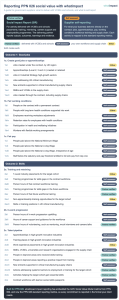
What suppliers deliver in partnership. Many of the most valuable skills outcomes depend on reaching people the supplier can’t reach alone. The target cohorts include young people not in education, employment or training, care leavers, people with long-term health conditions, prison leavers and people leaving education. Charities, social enterprises and schools already work with these communities every day. Future workforce training, mentoring and careers talks, essential skills support, and training in deprived areas are all metrics where a VCSE or school partner is often the strongest delivery route.
The guidance recognises this. It encourages buyers to point suppliers towards Community Programmes, and asks suppliers to describe how they will engage, co-design, partner and collaborate to reach the target cohort.
Two reporting modules, one evidence base
whatimpact reflects these two routes with two reporting modules.
Partner-verified Social Impact Reports (SIR) cover activity delivered with VCSEs and schools. The delivering organisation reports outputs, outcomes, learnings and supporting evidence, such as case studies, surveys and testimonials. This is where metrics like people in deprived areas reporting a positive impact from training can be evidenced properly, in the words of the people who experienced it.
Self-assessed reporting covers what suppliers deliver directly on the contract: employment and skills, environmental activity and supply chain. Each activity is mapped to the standard reporting metrics.
Every report is linked to the contract number, contracting authority and procurement framework. Suppliers and their clients see the same picture, as it happens.
Numbers backed by real outcomes
The standard reporting metrics are numbers, and buyers need them. But PPN 026 also asks evaluators to judge quality: how a supplier will reach the target cohort, tailor support, and help people progress at the end of the activity. Suppliers who can show what actually changed for people, not just how many took part, will write stronger bids and build stronger track records.
That’s the gap qualitative, standardised impact reporting fills. Every number on a KPI return is backed by evidence of the difference it made.
Ready for PPN 026
whatimpact impact reporting has embedded the GOV Social Value Model metrics from PPN 002, and now the PPN 026 standard reporting metrics. Whether a commitment is delivered in partnership or directly, it can be reported in the format clients need, with grassroots evidence behind every figure.
Find out how whatimpact helps government suppliers deliver and evidence PPN 026 social value: whatimpact.com/private-sector